



When E.W. Scripps acquired Nuvyyo, the maker of Tablo, in January 2022 for about $14 million,[1] the move signaled that Tablo was becoming part of a larger corporate strategy rather than remaining a standalone OTA DVR company. Scripps later positioned Tablo as a product that combines over-the-air TV with curated free ad-supported streaming television channels,[2][3] showing a broader emphasis on streaming alongside antenna viewing. For longtime Tablo owners who bought into the original vision of a dedicated antenna DVR, that shift matters even more now that support for legacy Tablo apps is ending on September 1, 2026.[4]
Tablo has announced plans to push customers toward a newer app that marries broadcast TV signals with dozens of free streaming channels, almost all of which are already available on other platforms. The core promise of delivering broadcast channels and enhanced features over smart TV platforms has started to erode, too: With the wind down of the legacy Tablo app, long-time users of those devices will soon lose access to novel features like automatic commercial skipping and the ability to watch content from their home DVRs when they travel. Scripps appears more focused on launching free, ad-supported streaming TV channels within the Tablo experience
What Tablo’s decision to pull legacy apps means for you
If you own a legacy Tablo DVR — any Tablo device that doesn’t look like its current-generation, round, white tuner — the company will stop supporting its legacy Tablo app on platforms like Roku, Google TV and Amazon Fire TV after September 1.
Nuvyyo, the Scripps-owned company that develops Tablo, says the legacy app will continue to work for some time, and they won’t force customers to switch to the newer app if they don’t want to. But Nuvyyo also said it will stop pushing out updates for the legacy app, meaning if features break over time, users will have to power through those problems or switch to the newer app with features and channels they may not want. Nuvyyo further said the app will disappear from partner app stores, so if customers delete the legacy app or switch to a new smart TV platform, they won’t be able to re-download it and will have to use the newer app.
Unsupported apps rarely fail in one swoop: Instead, they deteriorate over time, making for a frustrating user experience. Switching to the new Tablo app is free, but there are considerable tradeoffs — some features aren’t moving over from the legacy app to the new one, which might impact some users who depend on certain functions for watching and recording live TV. Tablo's own support materials say some legacy features will not be carried forward into the newer experience, including Tablo Connect for out-of-home viewing and auto ad-skip. The company's guidance for moving to 4th Generation also highlights broader feature differences and recording limitations.[7][8]
Why ZapperBox is different
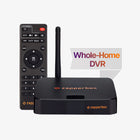
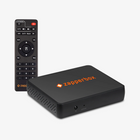
ZapperBox is built around a different idea; the antenna remains the center of the experience. ZapperBox is a distributed whole-home TV gateway designed to support both ATSC 1.0 and NEXTGEN TV, letting users place device(s) where antenna reception is best and stream live and recorded TV throughout the home.[9][10] That architecture turns OTA television into a shared household resource instead of tying it to a single box in a single room.[9]
For former Tablo users, the practical advantage is flexibility. ZapperBox emphasizes multi-room viewing, continued app support, and networked TV functionality.[9][10][11] It already supports multi-room viewing for DRM-protected content on remote TVs,[10][11] and its roadmap points to broader app availability on platforms like Roku, Apple, and Fire TV.[11]
Where a dedicated Zapper Mini outshines apps
Apps are great for convenience, price, and mobility, but they face real challenges when it comes to advanced ATSC 3.0 features like HDR, Dolby Atmos, DRM, and broadcaster apps. Not every legacy platform will support all these capabilities and porting them to third-party platforms takes time. That is why the Zapper Mini comes first: it provides a baseline device built to support the full ATSC 3.0 experience in every room while ZapperBox apps continue to add low-cost convenience.[11]
The Zapper Mini also sharpens the away-from-home story. ZapperBox's roadmap outlines plans for away-of-home viewing, including encrypted content, and positions the Mini as the easiest way to carry the full home DVR experience with you when you travel.[11]
Recording and watching TV, without legacy constraints
As Tablo shifts its focus to the fourth‑generation platform, some legacy premium features---like away‑of‑home Tablo Connect and automatic commercial skip---are not supported in the new apps.[7][8] In contrast, ZapperBox was built on the philosophy of supporting NEXTGEN TV while preserving the way Tablo, TiVo, and HDHomeRun users have traditionally watched antenna TV.
ZapperBox has been able to pull this off despite the DRM and encryption challenges that led Tablo to cancel its NEXTGEN TV product and kept HDHomeRun from offering support for encrypted NEXTGEN TV channels.[12] The result is a distributed multi‑room DVR system that lets you place ZapperBox DVRs where reception is strongest, watch TV from any room, and grow the system as your needs evolve. In "The Appy Roadmap," ZapperBox outlines future support for out-of-home viewing, even for encrypted programs.[11]
From single‑room DVR to whole‑home experience
ZapperBox treats your antenna(s) as a shared resource, not a series of one‑off installs. Place ZapperBox devices where your antennas perform best, connect them to your DVRs, and then watch and record from other rooms without moving any hardware.[9][10] That is especially compelling if you have already invested in multiple streaming devices or smart TVs and want multiple, reliable, shared OTA gateways.
Imagine having two antennas pointing at two different markets, like Milwaukee and Chicago, feeding independent dual or quad tuner DVRs and watching either market from any room. See how ZapperBox customer Bob Haines did this using a complex SmartKom antenna combiner from Televes,[13] then imagine doing it by simply plugging the two antennas into two different ZapperBox DVRs.
A future that includes NEXTGEN TV
Tablo has no public roadmap for a NEXTGEN TV DVR. Legacy devices and apps are in maintenance‑and‑retirement mode,[4] and Tablo's fourth‑generation line has its own feature trade‑offs and limitations, including no PC/Mac support, no out-of-home viewing, transcoding to compress content, and non‑transferable recordings.[7][8]
ZapperBox, by contrast, was conceived as a NEXTGEN TV‑ready gateway focused on ATSC 3.0 and ATSC 1.0, robust tuner performance, ease of copying recordings,[14] and an interface that continues to evolve with user feedback.[9][10][11] It does not compress the original content to save disk space or push more bits across a network, so you watch the same pristine bits that came from your antenna. ZapperBox recently added support for Windows and macOS apps[15] and is working on Roku OS support.[11] If you care about HDR, 4K, Dolby Atmos, broadcaster apps, and the evolving ATSC 3.0 standard, you are better served by a platform that is actively investing in the future of OTA rather than slowly winding down ATSC 1.0 DVRs.[9][10][11]
Why it's smart to move before something breaks
You do not have to wait for September 1, 2026---or the next big Roku or Fire TV update---to make a change. Migrating from Tablo Legacy to ZapperBox while your current system still works gives you breathing room: you can compare behavior, test reception, and move family members over gradually instead of in the middle of a service interruption.[4] Consider using an RF splitter to send the same antenna signal to both devices and plug them into different HDMI inputs of your TV. Take advantage of our 90-day full money back guarantee and free two-way shipping.
This lets you plan your hardware and wiring cleanly. You can choose whether to keep your existing Tablo online for a while and re‑use the same antenna, or upgrade your RF setup while you deploy ZapperBox as your primary OTA gateway. That kind of planned transition is always smoother than a midnight scramble right before the Superbowl.
Stay ahead of changes: sign up for the ZapperBox newsletter
If you are a Tablo Legacy user watching the September 1, 2026 deadline approach, staying informed is just as important as picking the right hardware. ZapperBox offers a monthly newsletter that covers NEXTGEN TV developments, new feature releases, and practical OTA tips, so you are never surprised by ecosystem changes.
You can register for the ZapperBox newsletter at https://zapperbox.com/#newsletter-home, and you will receive ongoing guidance on antenna setup, multi‑room streaming, DVR best practices, and roadmap updates that matter to Tablo and other legacy ATSC 1.0 DVR users. It is an easy way to turn a looming end‑of‑support notice into a proactive upgrade plan.
Making the move, on your terms
For many Tablo Legacy owners, the DVR has quietly become part of daily life: recording news, local sports, and primetime shows, often for family members who never think about the technology behind it. The end of legacy app support risks turning that invisible reliability into visible frustration.[4]
ZapperBox offers a path out of that corner. By treating your antenna as a shared gateway and introducing your family to NEXTGEN TV, ZapperBox gives you a modern OTA experience that is built to grow with you instead of aging out of the platforms you rely on.[9][10][11] Make the move while you are still in control of the timeline and turn "end of support" into an upgrade opportunity.
-
https://www.streamtvinsider.com/video/scripps-marries-fast-ota-new-tablo-dvr-enabled-device
-
https://community.tablotv.com/t/support-for-legacy-tablo-apps-ending-sept-1-2026/46359
-
https://zapperbox.com/blogs/blog/zapper-box-multi-room-dvr-and-gateway
-
https://thedesk.net/2023/03/tablo-atsc-3-0-quad-hdmi-still-developed-shipping-date/


